
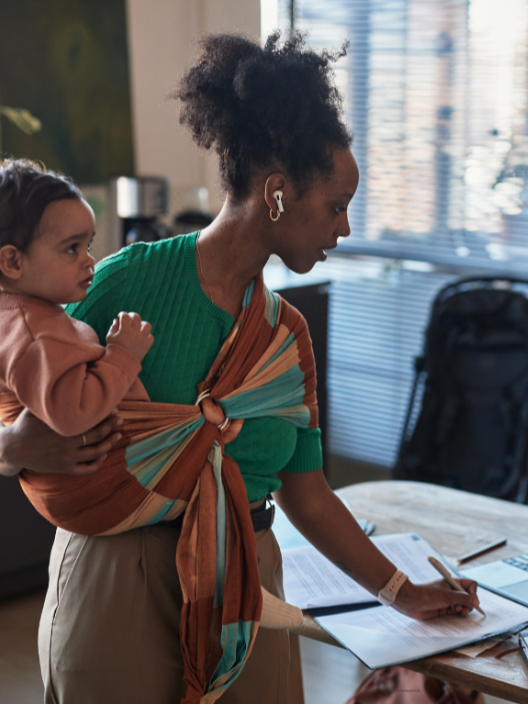
The Invisible Load of Being the Default Parent: How It Quietly Affects Your Marriage
By Abigail Ajodha, Registered Psychotherapist
Women’s Therapy Centre | Virtual therapy across Canada
You remembered the dentist appointment.
You packed the lunches.
You signed the permission form.
You noticed the child was running low on medication.
You scheduled the birthday gift.
You arranged the childcare.
You reminded your partner about soccer.
Again.
And then someone asks:
"Why are you so stressed?"
For many women, the answer isn't a lack of support.
It's the invisible responsibility of being the default parent.
The person who carries not only the tasks, but the responsibility for remembering that the tasks need to be done in the first place.
And over time, that invisible load can quietly affect not only your well-being, but your marriage as well.
What Is a Default Parent?
The default parent isn't necessarily the parent who spends the most time with the children.
It's the parent who carries the mental load.
The parent who:
- remembers appointments
- tracks school deadlines
- notices when supplies are running low
- anticipates problems before they happen
- manages schedules
- carries the emotional needs of the family
- keeps the household running behind the scenes
Even when both parents are involved, one person often becomes the manager of family life while the other becomes the helper.
And those are two very different roles.
The Mental Load Is More Than a To-Do List
Many women struggle to explain why they feel overwhelmed.
After all, some tasks only take a few minutes.
But the mental load isn't simply about completing the task.
It's about carrying the responsibility for remembering, anticipating, organizing, and planning.
You aren't just packing lunches.
You're remembering that lunches need to be packed.
You aren't just booking appointments.
You're keeping track of every appointment that needs to be booked.
You aren't simply helping your family function.
You often feel responsible for ensuring that nothing falls apart.
That responsibility can become exhausting.
Why Resentment Builds So Slowly
Most women don't wake up one day feeling resentful.
The process is usually much quieter.
First comes responsibility.
Then overwhelm.
Then exhaustion.
Then loneliness.
Then resentment.
Because carrying the invisible load can create a painful experience:
You are surrounded by people you love, yet feel completely alone in the responsibility of managing everyone's needs.
Many mothers find themselves thinking:
- Why am I the only one noticing this?
- Why do I always have to ask?
- Why can't someone else take ownership?
- Why does everything seem to fall back on me?
The resentment is rarely about one forgotten task.
It's often about feeling solely responsible for the family system.
"But My Partner Helps"
This is where many women become confused.
They love their partner.
Their partner contributes.
Their partner is trying.
So why are they still angry?
Because often the issue isn't whether help exists.
It's ownership.
Many default parents describe feeling like they are the project manager of the household.
Their partner may willingly complete tasks.
But they are still relying on someone else to identify the task, delegate it, track it, and follow up.
One person is carrying responsibility.
The other is carrying assignments.
Those experiences feel very different.
Why Default Parents Often Struggle to Relax
One of the most common experiences I hear from women is:
"I don't know how to shut my brain off."
Even when sitting on the couch, their minds are running.
Thinking about:
- tomorrow's schedule
- school forms
- appointments
- groceries
- emotional needs
- household tasks
- future problems
Their bodies may be physically resting.
But their nervous systems are still working.
This is one reason why many women experience chronic stress, emotional overwhelm, and burnout.
If this feels familiar, you may also enjoy reading The Invisible Load of Parenting a Neurodivergent Child, where we explore how caregiving responsibilities can become all-consuming over time.
How the Default Parent Role Quietly Affects Marriage
Couples often believe they are arguing about dishes, laundry, bedtime routines, or schedules.
But underneath many of those conflicts is something deeper.
The desire to feel supported.
The desire to feel understood.
The desire to feel like someone else is helping carry the weight.
When one partner consistently carries the mental load, emotional intimacy can begin to suffer.
Conversations become transactional.
Resentment replaces appreciation.
Exhaustion replaces connection.
The relationship can start to feel less like a partnership and more like a management role.
Not because either partner intended it.
But because invisible responsibilities remained invisible for too long.
The Emotional Cost of Always Being Responsible
Many women become so accustomed to carrying responsibility that they no longer recognize the impact it is having on them.
They push through.
Keep going.
Handle one more thing.
Then one day they realize:
- they feel disconnected from themselves
- they are constantly irritated
- they rarely experience true rest
- they struggle to ask for help
- they feel guilty when prioritizing their own needs
For some women, these patterns began long before parenthood.
If you often feel responsible for everyone around you, you may also relate to First-Generation Women, Family Expectations, and the Weight of Responsibility, which explores how cultural expectations and family dynamics can shape our relationship with responsibility.
What Can Couples Do?
The goal isn't to determine who is working harder.
The goal is increasing visibility.
Many partners genuinely do not see the amount of invisible labour occurring behind the scenes.
Helpful conversations often focus on:
- discussing the mental load directly
- identifying invisible responsibilities
- increasing shared ownership
- reducing assumptions
- creating systems that distribute responsibility more evenly
The solution isn't necessarily doing every task equally.
It's ensuring one person isn't carrying the entire burden of remembering, managing, and anticipating.
You Weren't Meant to Carry It All Alone
Many women have become so skilled at managing everyone else's needs that they have forgotten to notice their own.
But constantly carrying the emotional and practical weight of a family comes at a cost.
You deserve support too.
You deserve rest too.
You deserve relationships where responsibility feels shared rather than silently carried.
Most importantly, you deserve a life where your needs matter as much as everyone else's.
If This Feels Familiar
If you're feeling overwhelmed by the mental load of parenting, struggling with resentment in your relationship, or finding it difficult to prioritize yourself, therapy can help.
Together, we can explore the patterns contributing to burnout, strengthen boundaries, process the emotional weight you're carrying, and create more space for your own well-being.
You don't have to keep holding everything alone. Start with a free virtual consultation to learn more.
FAQs
What is a default parent?
A default parent is the parent who carries the primary mental and emotional responsibility for managing family life, including planning, organizing, remembering, and anticipating needs.
What is the mental load in parenting?
The mental load refers to the invisible work involved in managing a household and family, including remembering appointments, anticipating needs, planning schedules, and coordinating responsibilities.
Why does being the default parent create resentment?
Resentment often develops when one parent consistently carries responsibility for managing the family while feeling unsupported, unseen, or alone in that role.
Can the default parent role affect a marriage?
Yes. When one partner carries most of the mental load, it can contribute to stress, emotional exhaustion, resentment, and decreased relationship satisfaction.
How can couples share the mental load more fairly?
Open conversations about invisible responsibilities, increasing shared ownership, and creating systems for distributing responsibilities can help reduce the burden on one partner and strengthen the relationship.
When to seek immediate support: If anxiety, trauma symptoms, or emotional distress are contributing to thoughts of self-harm, seek immediate support. In Canada, please call or text 9-8-8 for free, confidential crisis support. In emergencies, call 911. This article is for informational purposes only and does not replace medical or psychological care.
June 18, 2026
Topics: Motherhood & Parenting, Relationships & Family Life
About the Author